Carceral Histories in the United States

I have been quietly working on a book about library services to people who are incarcerated, to be published by ALA in 2021. I am glad to stand with librarians who are doing the work to critically interrogate librarianship and the profession’s complicity with systems of policing, incarceration, and white supremacy.  Thanks to my editor and to ALA, I have the opportunity to offer a prepublication chapter of the book to the world.

You can access the chapter titled Carceral Histories in the United States at the link below. This chapter covers some of the early practices that led to present day carceral systems in the United States.  It specifically focuses on how librarians conceptualized providing information to incarcerated people in the period between the late 1800s until the early 1990s. This is the second chapter from my forthcoming book, Library Services and Incarceration: Recognizing Barriers, Strengthening Access (working title).


If you’ve viewed the timeline of services I previously posted on my blog, you’ll hopefully benefit from the expanded and revised timeline located at the end of this chapter.

Thank you for your interest in library services to people who are incarcerated.  I welcome any feedback and perspective that might improve the published edition of this chapter.
Essay on Information Access

My essay on information access in carceral institutions is now available online through Feminist Media Studies. Here’s the abstract:

Policing and incarceration are feminist issues that stand to be interrogated through examinations of carceral practices. This essay positions the management and withholding of information and the observation of communications as instances of carceral specific practices that shape possibilities for incarcerated people and their communities. The author draws from their experience as a librarian in carceral facilities to outline how State-enacted violence occurs through the regulation and management of information access. As carceral facilities utilize third-party ICT providers, it is difficult to ascertain what information is or is not available. The introduction of new and evolving ICTs has led to increased opportunities for the State to monitor people who are incarcerated and their communities, positioning incarcerated people and their networks not only as sources of information but as data to train technologies of policing and surveillance. Instances of resistance to these practices reveal some ways that people who are not incarcerated can act in solidarity with people who are incarcerated and people who are subject to State surveillance.

You can access the full essay at

Austin, J. (2020). Information access within carceral institutions. Feminist Media Studies. DOI: 10.1080/14680777.2020.1786933

Tracking COVID 19 in Jails and Prisons

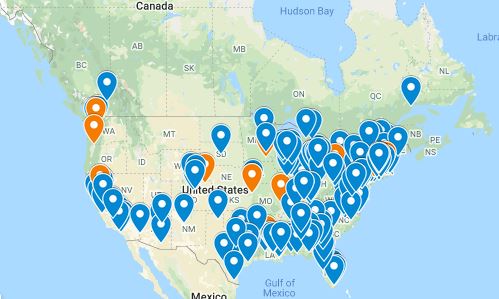
Covid-19 Behind Bars is an independent investigative effort to track reports of COVID-19 inside of jails and prisons.  It utilizes information from published sources alongside self-reports from people inside to map the spread of COVID-19 in carceral institutions.

Here is the map of North America as of 4/2/2020.  Blue pins are published reports, orange pins are self-reports of cases inside.

COVID19Map

More information about the project is available at https://covid19behindbars.com/


Publications on Jail and Prison Libraries, 1992-2019

I have been conducting a literature review of publication on American jail and prison libraries as a follow-up to the timeline of library services to incarcerated people.  The list below, while potentially not comprehensive, includes publications on this topic from 1992 through the present.

About the list: I prioritized peer-reviewed articles while assembling this list, but did include a few instances of more popular texts.  Two special issues on this topic appeared in the time frame examined (a special issue of Education Librarian in 2000 and a special issue of Library Trends on Library and Information Services to Incarcerated Persons: Global Perspectives in 2011).  The list also includes books, briefs, and chapters, all marked with an *.  All items are listed in chronological order.  (Please note: this list does not contain publications on library services in juvenile detention centers or publications that are primarily personal accounts written by librarians in jails and prisons.  Articles published in popular journals published through ALA were prioritized in the creation of this list.  These restrictions not only reflect the discourse of library and information science education and theory, they also helped to scope the review project — necessary since there are over 100 mentions of or articles about carceral facilities during this period in Library Journal alone.)

Please feel free to contact me if you notice there is something I’ve missed!

Continue reading “Publications on Jail and Prison Libraries, 1992-2019”